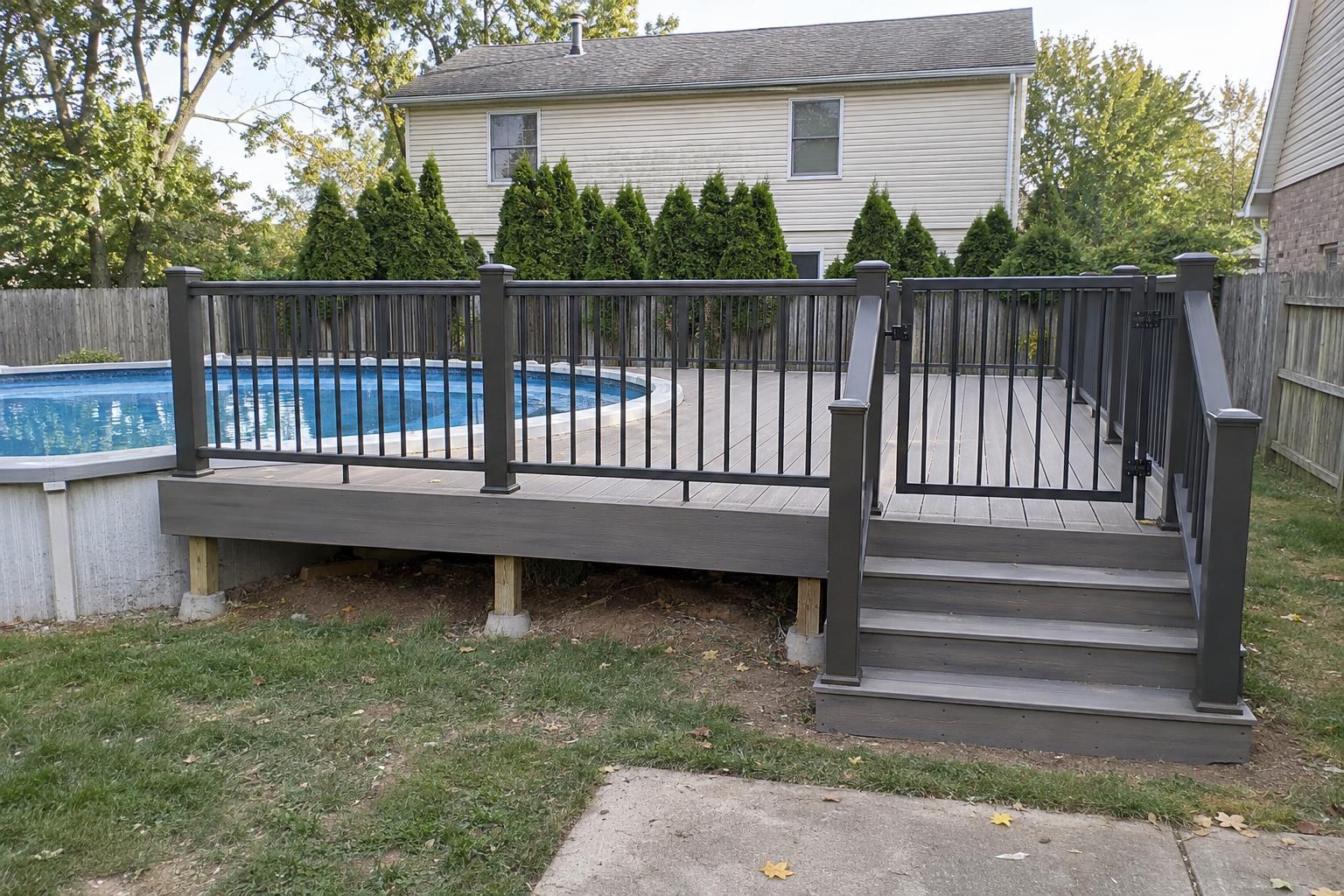
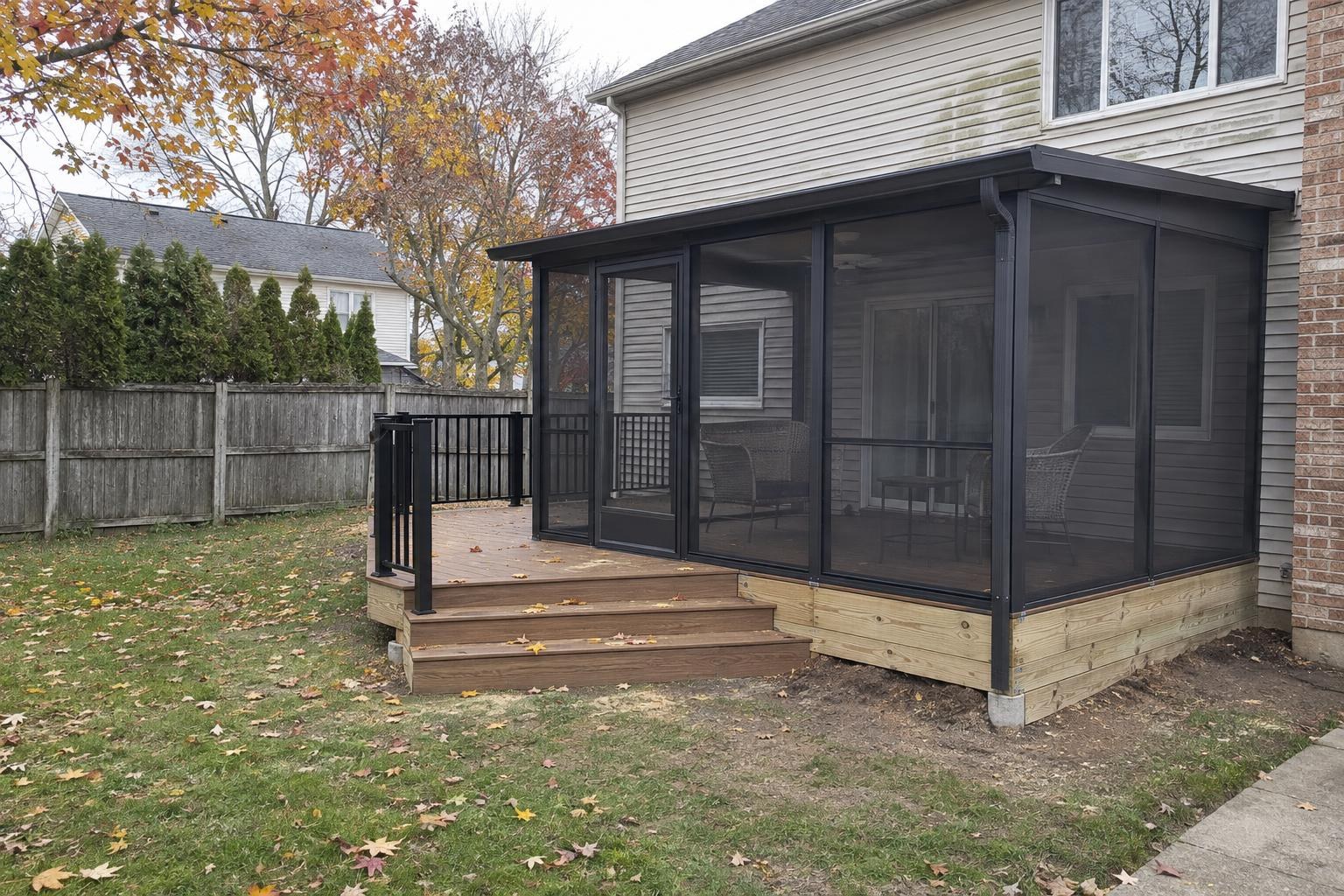
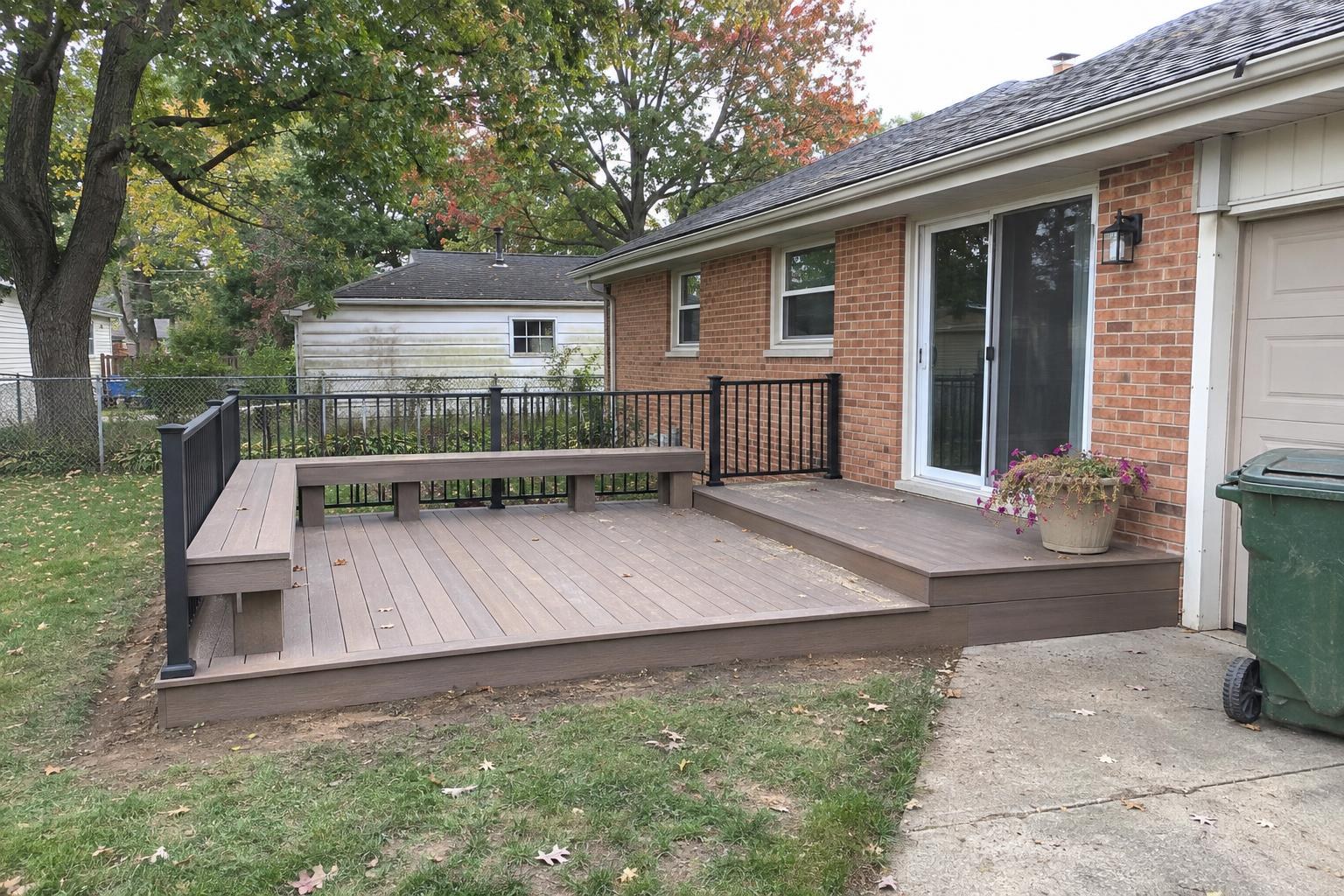
Every job below is one we do ourselves across Elk Grove village.
We frame new decks with pressure-treated joists set 16 inches on center, footings poured below Illinois's 42-inch frost line. That's the part nobody sees once the boards go down, and it's the part that decides whether the deck is still level in ten years.
We'll walk your yard and figure out where the deck actually makes sense, not just where the slider happens to be. Multi-level layouts, built-in bench seating, and spots for a grill or hot tub all change the framing underneath, so we plan that before any lumber shows up.
Soft or spongy boards, a railing that moves when you lean on it, stairs that bounce, we fix all of it without necessarily tearing the whole deck apart. Sometimes the fix is a few joists and a ledger board, sometimes it's cheaper to replace the whole structure, and we'll tell you which one you're actually looking at.
We pressure wash first, let the wood dry out for a couple of days, then sand down any raised grain before staining. A semi-transparent oil stain holds up better against UV graying than most water-based products, and we'll tell you which one your wood actually calls for.
Composite boards like Trex or TimberTech cost more up front but skip the every-other-year sanding and restaining cycle that wood decks need. We still frame underneath with real lumber or steel joists, composite only replaces the boards and sometimes the railing, not the structure.
When the framing's shot but the footings are still good, we'll reuse what's sound and replace the rest instead of starting from a bare patch of dirt. That keeps the cost down without cutting corners on the parts that actually hold the deck up.
Illinois code calls for guardrails at 36 inches on most residential decks and baluster spacing that won't pass a 4-inch sphere through it. We build to that spec whether we're replacing a whole railing system or just the section that's come loose.
Stepped decks and wraparound layouts need stair stringers and landings calculated for the actual rise and run, not eyeballed. We lay that out before cutting anything, because a stair that's off by half an inch per step is the kind of thing people trip on.
A pergola or shade structure attached to an existing deck changes the load on those posts, so we check the framing before we bolt anything to it. We'll build it as part of a new deck or add it to one that's already standing.
Sometimes the right call is tearing the old deck out down to the ledger board and starting the framing over. We haul the old lumber off site, that's not left for you to deal with.
Four steps, and no surprises in any of them.
You tell us what you want doing, we look at what is actually there, and we ask the awkward questions early.
In writing, itemised, free. If something might add cost later we flag it now rather than at the end.
Same crew throughout. We cover your floors, keep the dust down and tidy up before we leave each day.
You point out anything you are not happy with and we fix it before the invoice, not after.
Deck construction and repair covered across these communities.
What comes up once a project actually gets started.
Describe the problem and we will tell you what it probably is. No obligation.